DeFi’s Next Act IV: Why Cardano May Soon Finally Have a Product Market Fit — WTF is DeFi Kernel?

Everyone on Cardano X seems to be talking about DeFi Kernel right now. Just as often, people are asking the same follow-up question:
What is it, and why should anyone care?
That’s a fair question. Cardano has spent years building a reputation for things that matter long term: careful engineering, strong staking economics, decentralization, and a community willing to think beyond the next market cycle.
What it hasn’t had, at least so far, is a DeFi product that clearly stands out from what already exists elsewhere.
There have been capable projects. There has been progress. But there hasn’t yet been a category-defining product that feels native to Cardano itself.
DeFi Kernel could become that product.
It may not matter because it makes bigger promises, but it starts from a different view of how markets should function.
And in finance, the assumptions built into the system often matter more than the brand on the front.
Cardano’s Long Search for DeFi Product-Market Fit
During the last cycle, much of crypto DeFi followed familiar models:
- AMMs
- pooled lending
- yield farming
- liquidity incentives
- TVL-driven growth strategies
Cardano’s ecosystem was no exception. Many projects understandably built around formats that had already proven demand elsewhere.
There’s nothing wrong with that. Those models created real value.
The problem is that mature categories already tend to have winners. If users want the deepest DEX liquidity, they usually know where to go. If they want large lending markets or active derivatives platforms, they know where to look.
That leaves newer ecosystems in a difficult position: competing inside categories designed and dominated by others.
Feature matching can help for a while, but it rarely creates leadership.
Real product-market fit usually comes when a platform builds something that makes sense because of how it works under the hood.
That may be where DeFi Kernel enters the picture.
What Is DeFi Kernel?
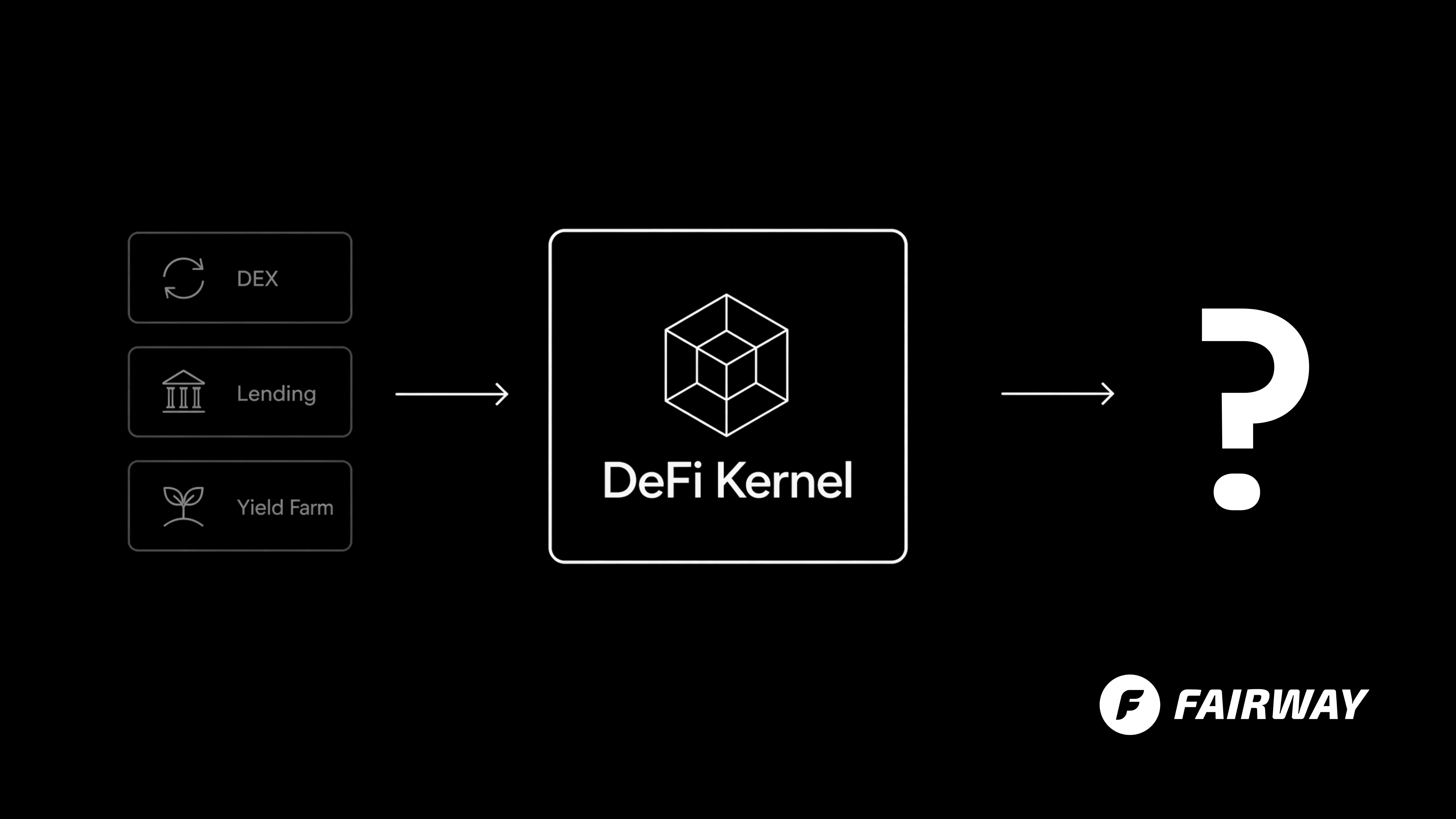
DeFi Kernel is not just another exchange, and it’s not simply another lending protocol.
A better way to think about it is as a shared financial coordination layer built on Cardano.
Instead of forcing every activity into separate apps with isolated liquidity, users can publish financial intents on-chain. Other participants can then discover those intents, respond to them, and build additional services around them.
Those intents could include:
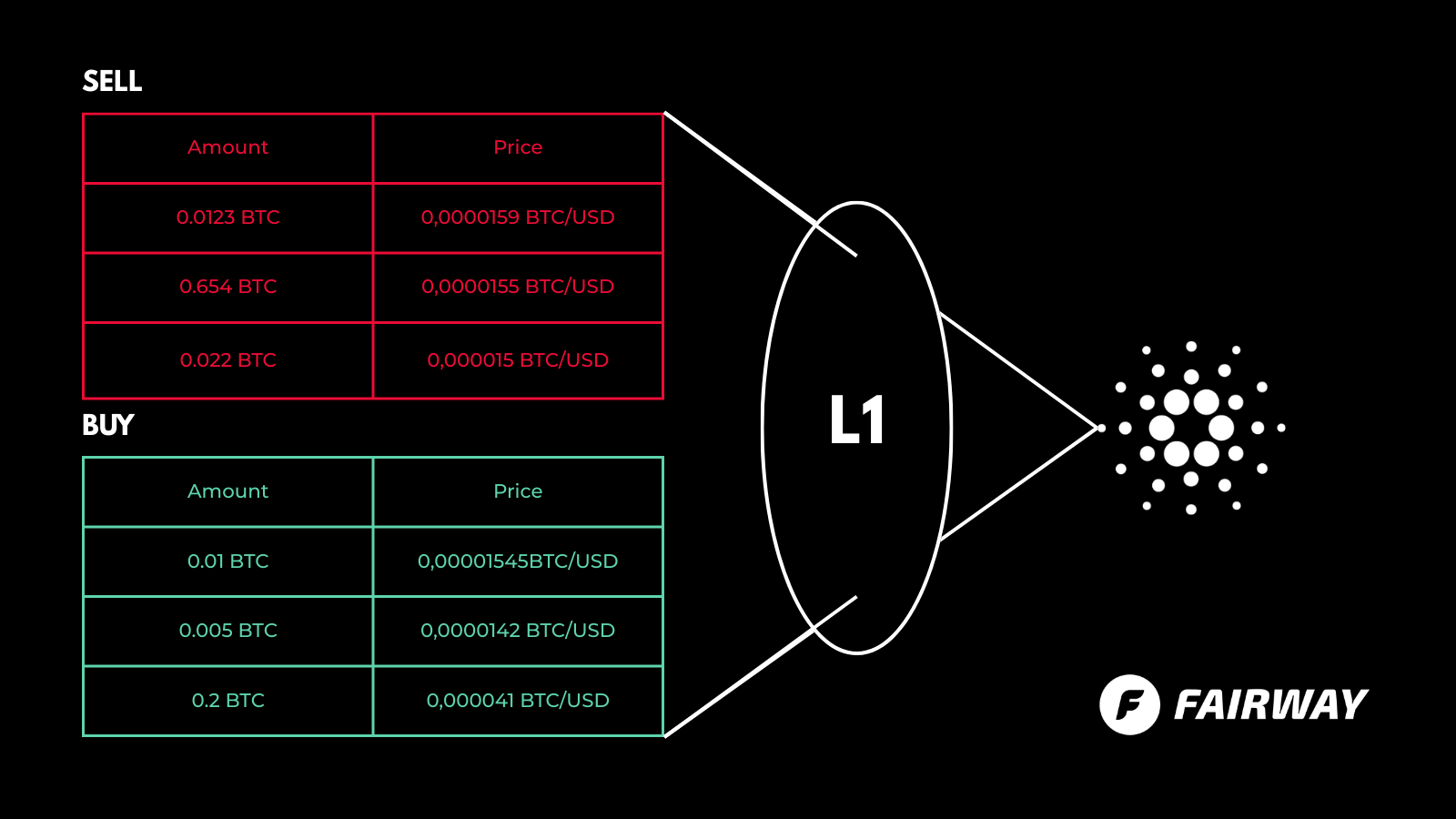
- trade offers
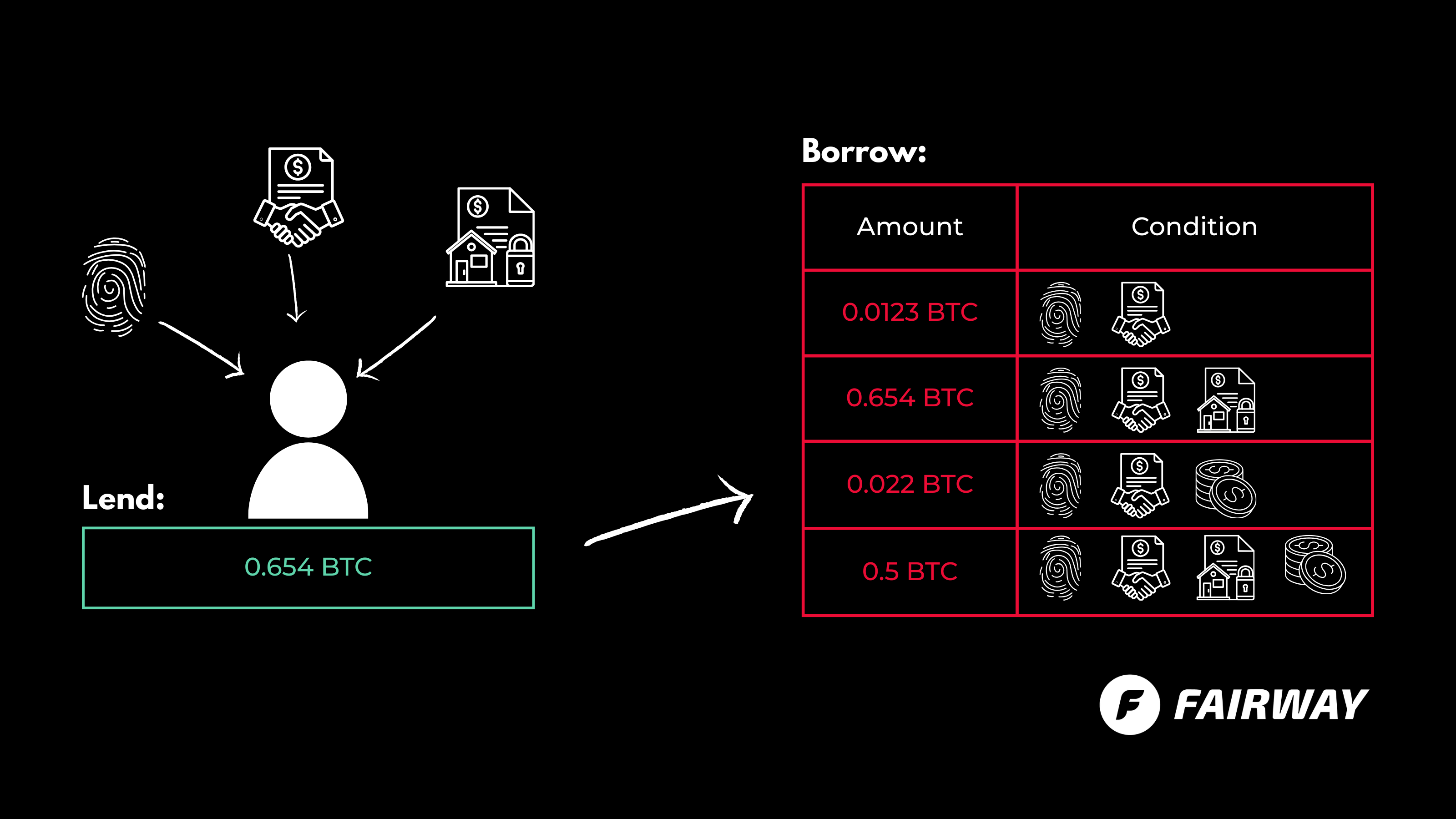
- loan requests
- options agreements
- marketplace listings
- custom peer-to-peer deals
- new financial products that don’t fit today’s templates
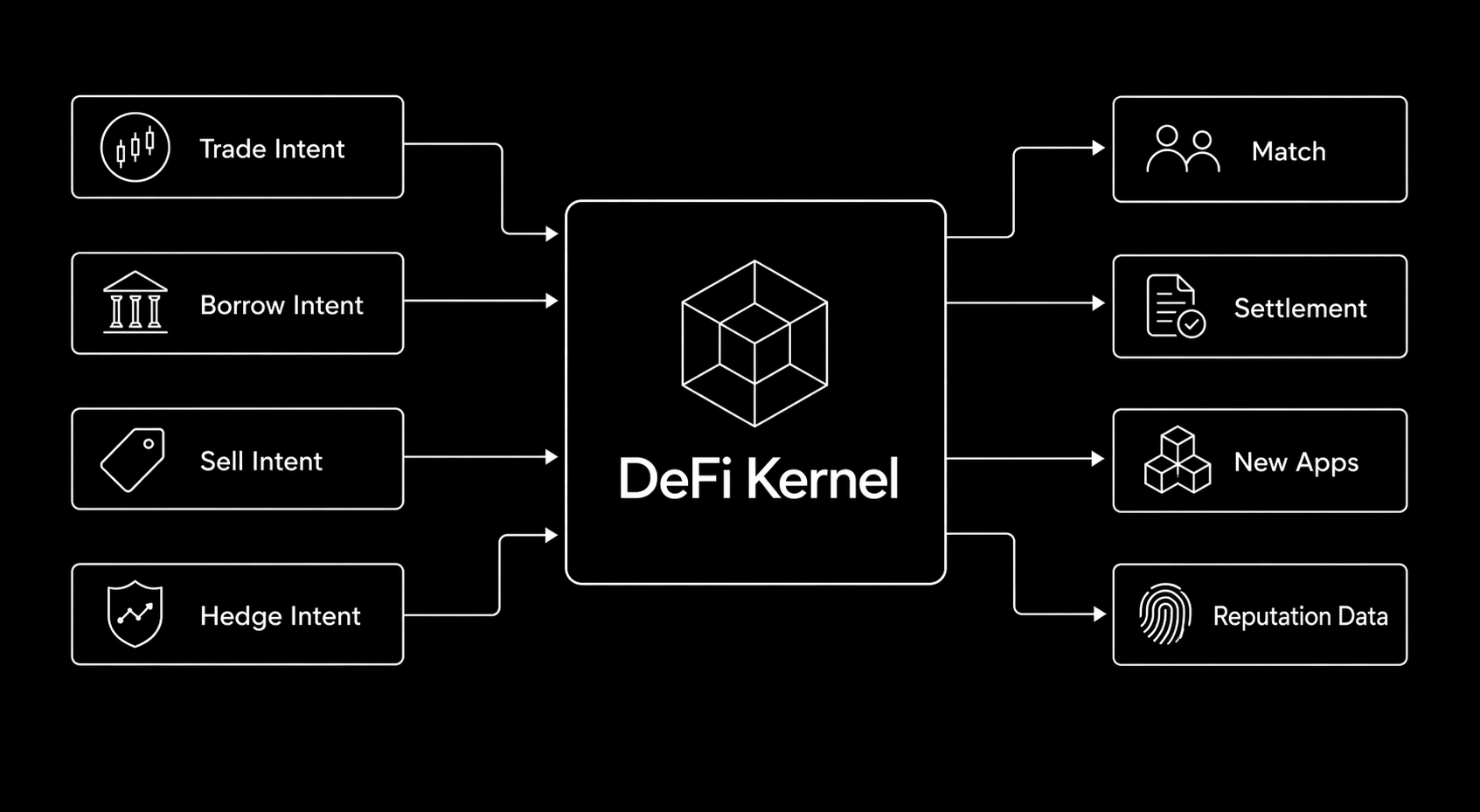
In practice, that means DeFi Kernel is less like a standalone product and more like infrastructure others can build on top of.
Think operating system, not single application.
That distinction matters.
Many DeFi products compete for users inside closed environments. A coordination layer tries to connect markets instead of fragmenting them.
How This Differs From Traditional DeFi
Most DeFi systems today revolve around pooled capital.
Liquidity sits in pools. Collateral sits in pools. Users interact with protocol-owned logic that routes everything through those structures.
That model helped DeFi scale quickly, but it also introduced tradeoffs:
- liquidity gets scattered across many apps
- users face fragmented experiences
- capital often sits idle
- incentives become repetitive
- lending remains heavily collateral-based and trader-focused
DeFi Kernel appears to move in another direction.
Instead of requiring every transaction to pass through a pool, it opens the door to:
- peer-to-peer matching
- direct negotiation between participants
- self-custody-first interactions
- liquidity that can serve multiple use cases
- financial products built through composition rather than siloed apps
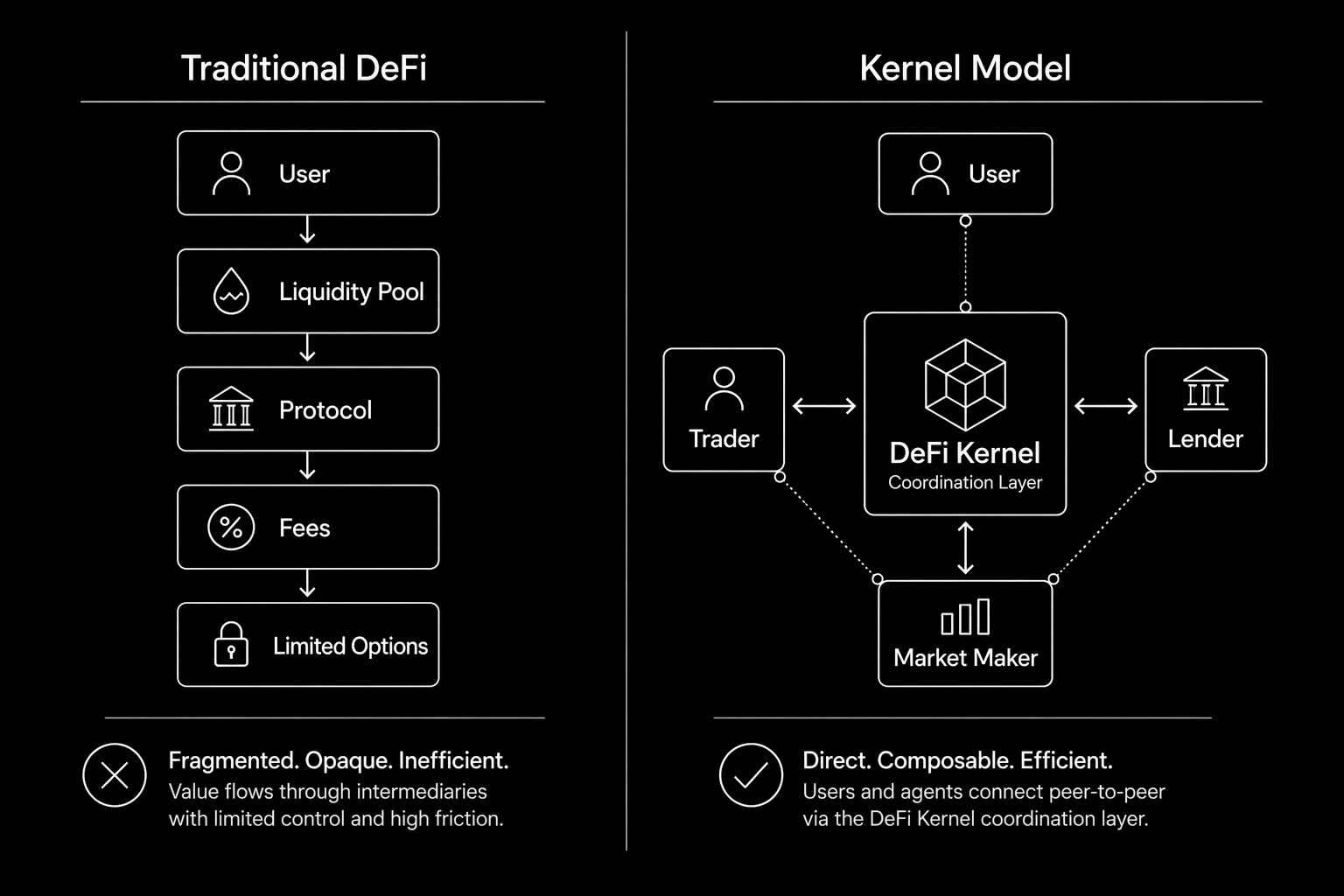
That’s more than a UI improvement or token redesign.
It changes how markets can form.
Why Cardano’s Architecture Matters
This is where the conversation gets more interesting.
IOG’s article, written by Rusty (fallen-icarus) The Account Model: A Trillion Dollar Mistake argues that many account-based blockchains face structural issues as activity grows. The core criticism is that when many users and applications compete over shared mutable state, complexity rises and efficiency can suffer.
That matters for finance.
Markets generate constant activity: new orders, new positions, cancellations, collateral changes, repayments, liquidations, and settlements. If every additional participant increases contention, scaling advanced market systems becomes harder over time.
Cardano’s eUTxO model takes a different approach.
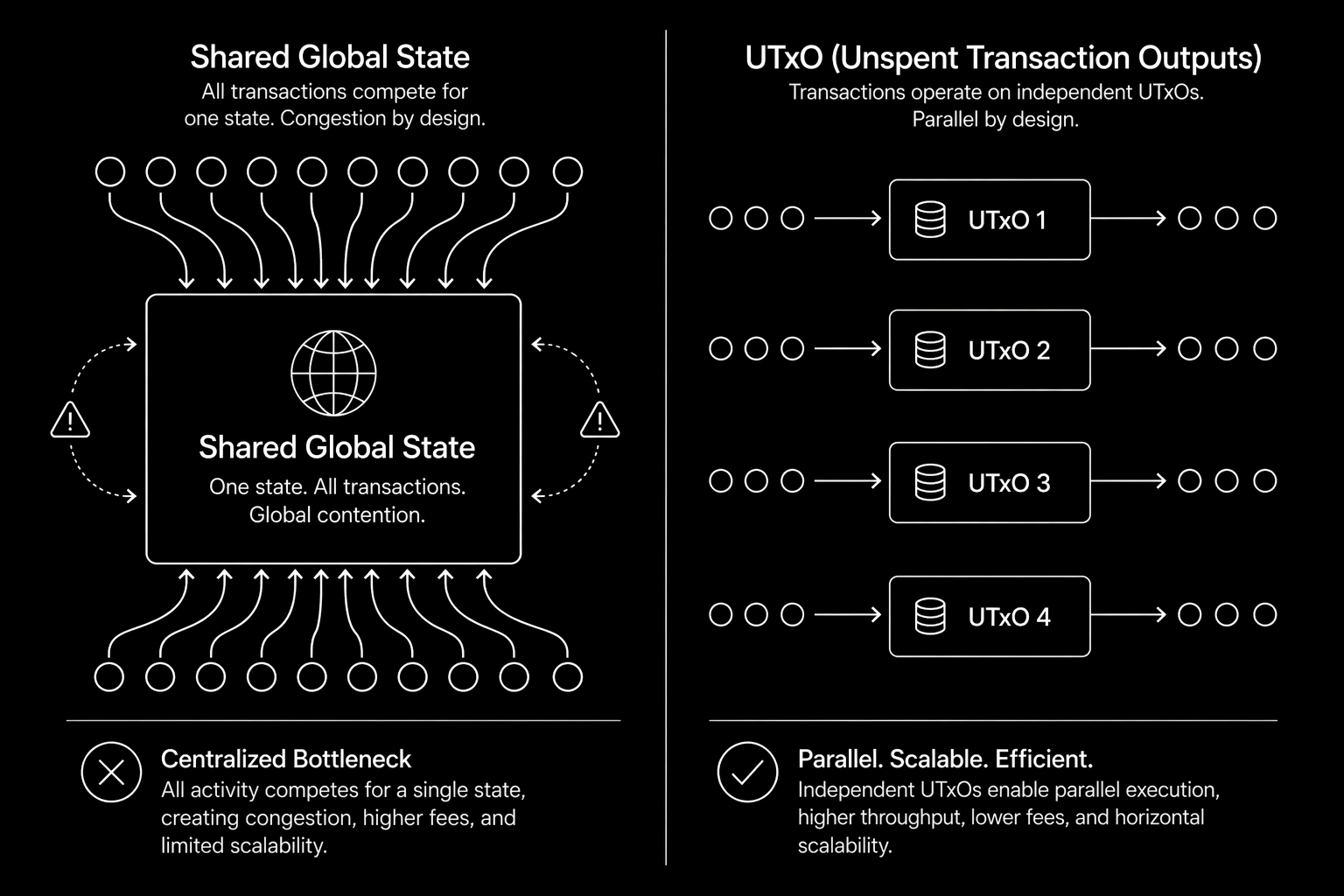
Rather than relying on one large shared state model, it treats outputs as discrete objects that can be independently referenced and updated. Without getting too technical, this can offer practical benefits for financial systems:
- clearer ownership boundaries
- more predictable execution outcomes
- independent contract logic
- easier modeling of discrete orders or intents
- less reliance on giant pooled honeypots
Put simply, growth doesn’t need to create the same kind of congestion costs by default.
That doesn’t guarantee success. But it does mean Cardano may be structurally well suited for systems like DeFi Kernel.
What This Could Unlock
1. More Useful Credit Markets
Most crypto lending still works like this:
- deposit collateral
- borrow less than you deposited
- risk liquidation if prices move against you
That model works for leverage and trading.
It is less useful for businesses, builders, or productive borrowing.
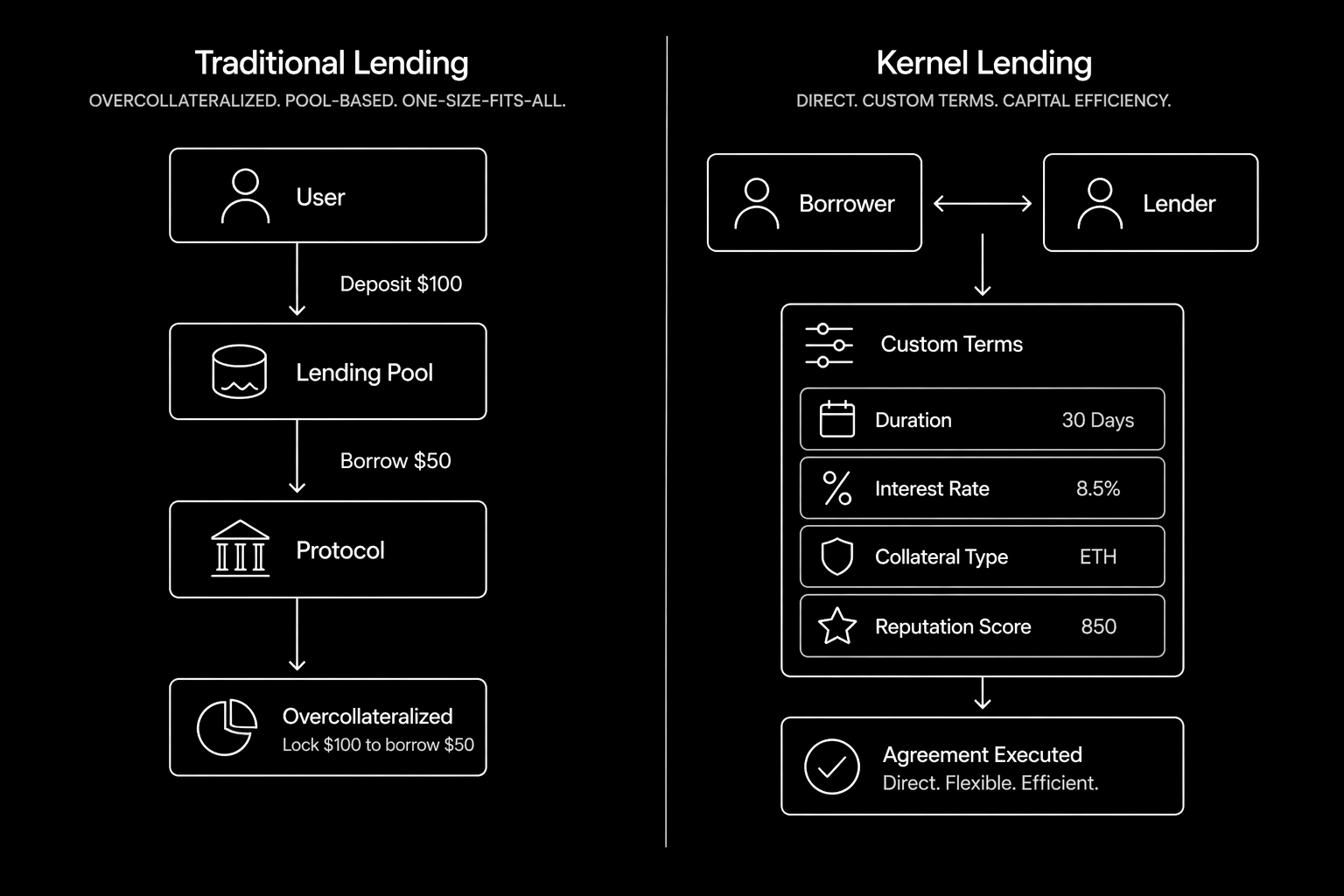
If DeFi Kernel enables negotiated lending terms between participants, DeFi starts to look less like margin infrastructure and more like real credit infrastructure.
That would be a meaningful shift.
2. Better Price Discovery
Healthy markets depend on efficient matching.
When systems become expensive or congested under load, spreads widen, execution worsens, and users pay the cost.
A model built around clearer intent matching and lower friction could improve:
- pricing efficiency
- market depth
- execution quality
- capital usage
That would benefit traders, but also every project building on Cardano.
3. Security Through Distribution
Large pools of capital attract attention.
Every major honeypot becomes a target for exploits, governance capture, or operational risk.
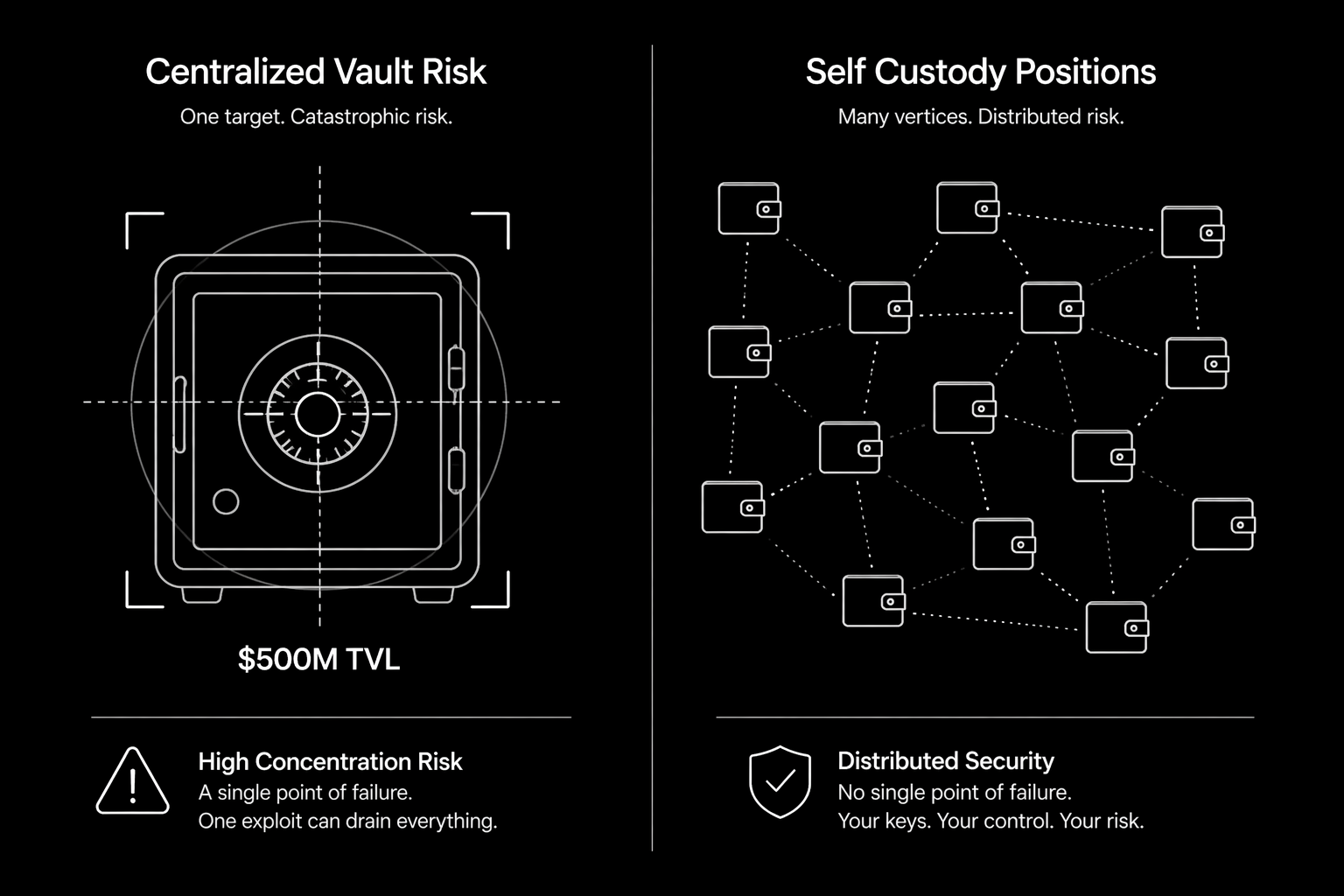
A more distributed self-custody model changes that equation. Risk never disappears, but concentration risk can be reduced.
That matters more than many people admit.
4. Institutional Relevance
Institutions tend to ask practical questions:
- Who owns the assets?
- Who controls settlement?
- Where does counterparty risk sit?
- Can the system be audited clearly?
Some pooled DeFi models struggle to answer those questions cleanly.
Transparent matching combined with self-custody may be easier for professional participants to evaluate.
Why This Could Become Cardano’s First Native DeFi Category
If DeFi Kernel works as intended, Cardano no longer has to frame itself as another smart contract chain trying to catch up.
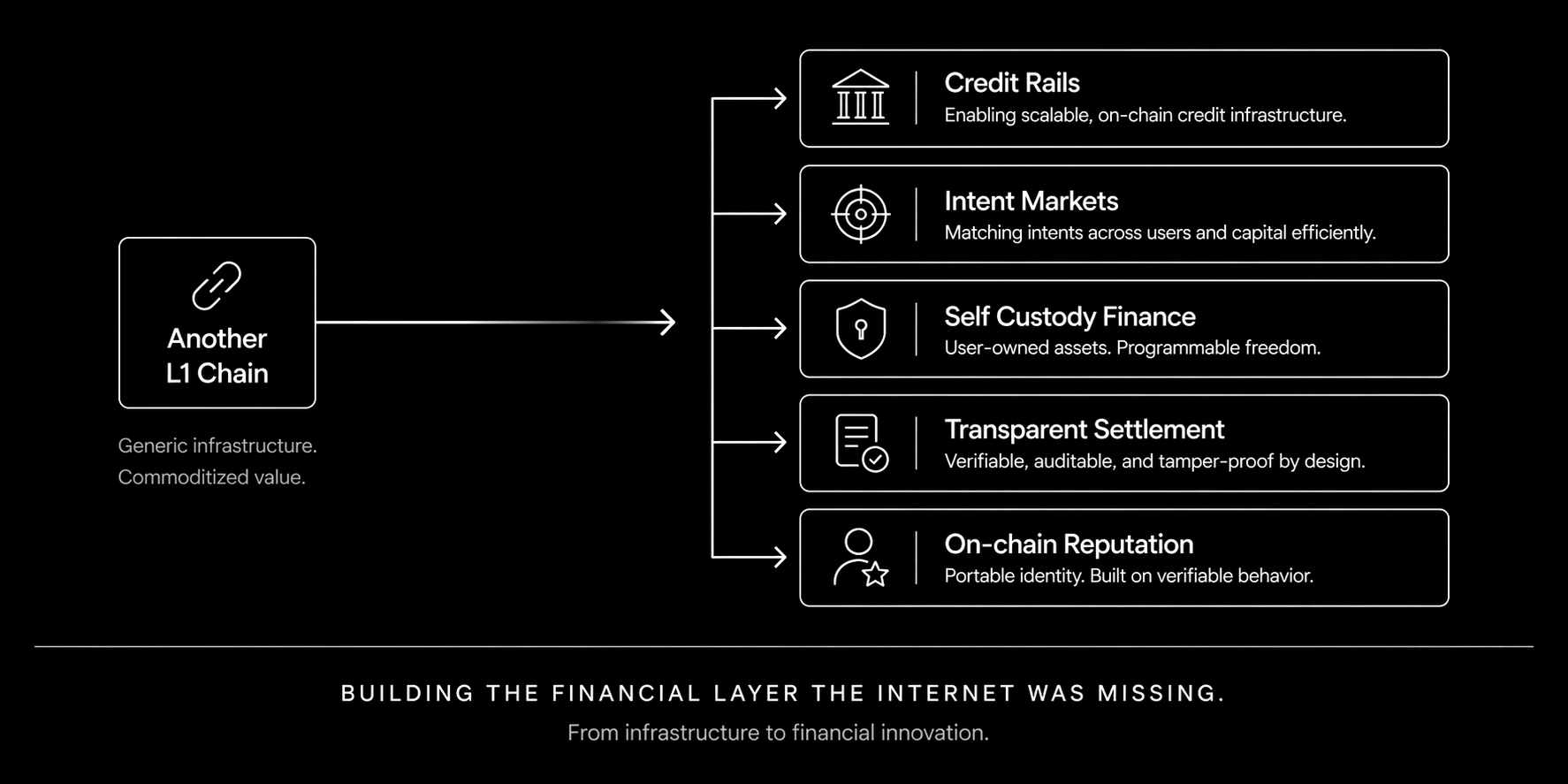
It can compete where its design gives it an edge:
- peer-to-peer credit markets
- intent-based finance
- transparent settlement systems
- self-custody-first market infrastructure
- scalable on-chain coordination layers
That’s a stronger position than chasing feature parity.
Markets usually reward platforms that own a category, not those that imitate one.
Reality Check
None of this is automatic.
Strong architecture helps, but users care about products they can actually use.
DeFi Kernel still needs:
- builders
- polished wallets
- simple interfaces
- liquidity
- integrations
- education
- real user demand
Many technically sound ideas never gain traction because distribution, UX, or timing fails.
The market rewards adoption first and elegance second.
Final Thought
For years, the common question around Cardano DeFi was:
How can Cardano replicate what already worked on Ethereum?
That may have been the wrong question from the start.
A better question is:
What kinds of financial systems make more sense on Cardano because of how Cardano is built?
That’s where genuine product-market fit tends to emerge.
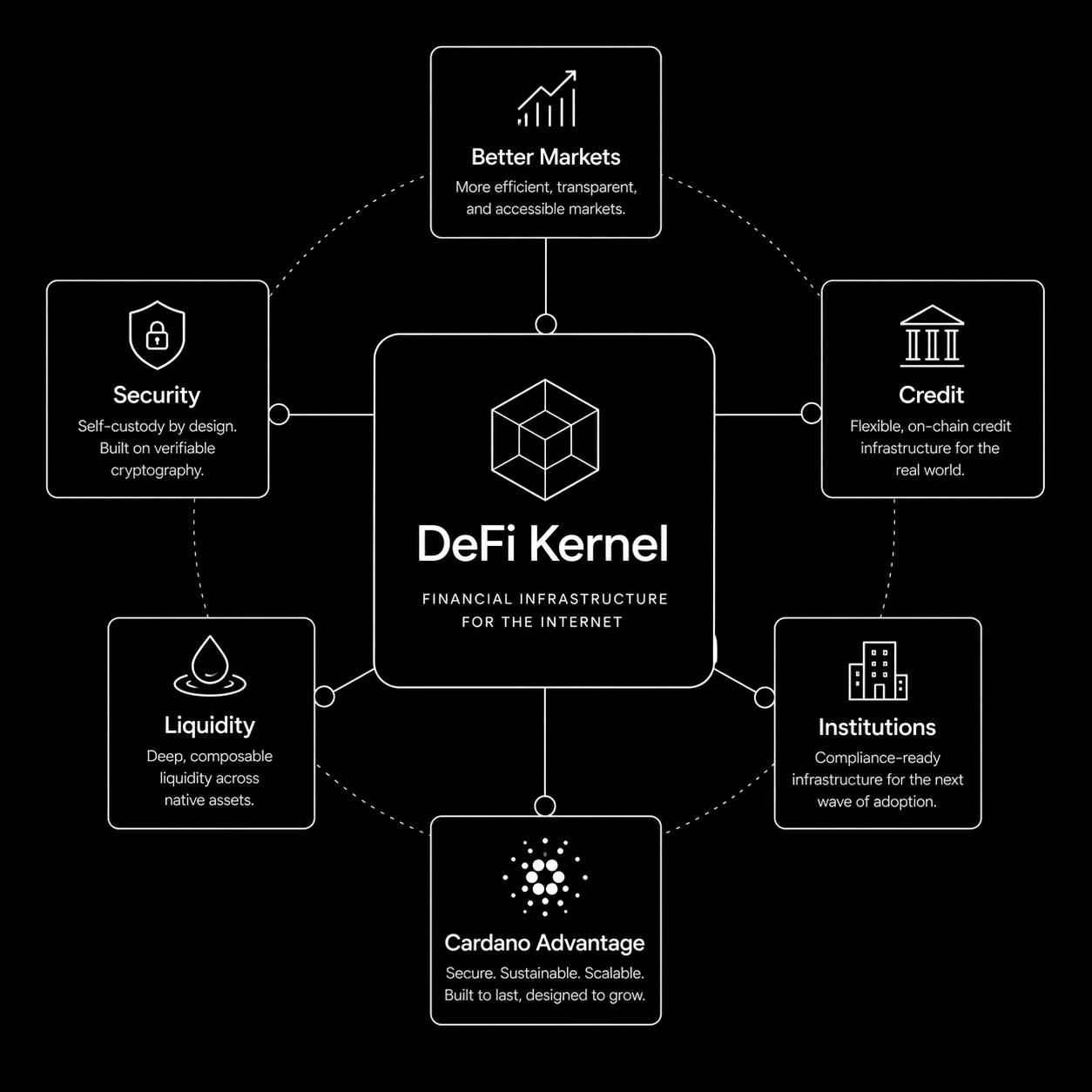
DeFi Kernel may be one of the first serious attempts to answer that question.
If it succeeds, Cardano won’t look late. It will look early.
Henrik Metsämäki
Expert in blockchain compliance and regulatory frameworks. Passionate about bridging traditional finance with decentralized technologies.